
Key Points
- A multi-year wave of grid, electrification, and public-works spending touches machinery, rental fleets, and specialty labor — but each company sits at a different point in that chain.
- Caterpillar (NYSE: CAT) and Deere (NYSE: DE) sell the iron; United Rentals (NYSE: URI) monetizes the equipment without the buyer owning it; Quanta Services (NYSE: PWR) supplies the skilled crews that actually build the grid.
- Each thesis has a distinct failure point — from commodity cycles to interest-rate sensitivity to labor shortages.
- The theme is durable, but durable is not the same as smooth; project timing and financing conditions can create years of lumpy results.
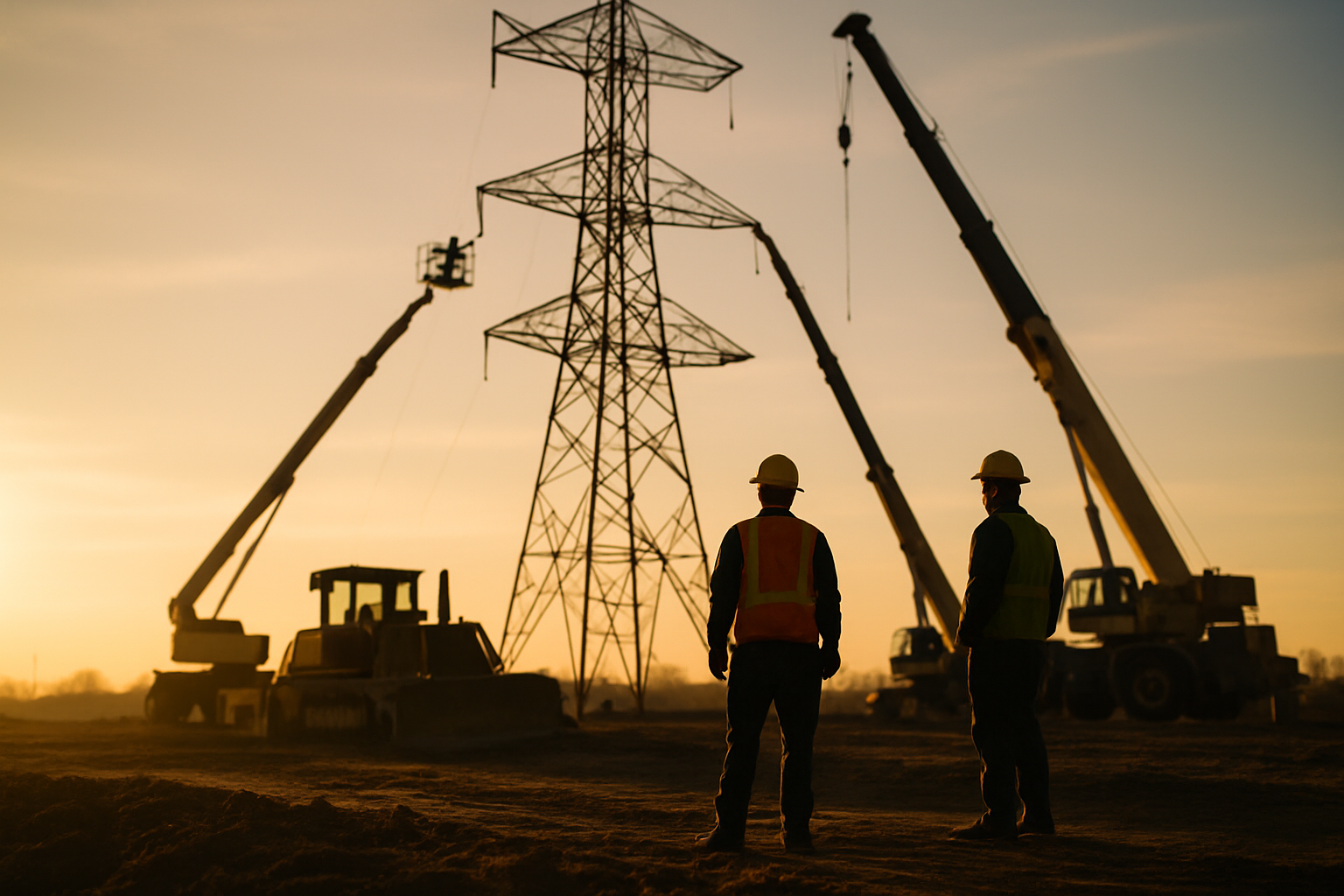
"Infrastructure decade" is an easy phrase to say and a hard one to invest in. Broad spending on the electric grid, transportation, and industrial electrification is real, but it doesn't land evenly. It shows up as dump trucks, telehandlers, transmission towers, and crews in bucket lifts — each of which belongs to a different business model with a different set of risks.
The useful exercise isn't asking whether the buildout is happening. It's asking where on the value chain a given company sits, and what specifically would have to go wrong to break the connection between the megatrend and the income statement.
Caterpillar: The Iron That Moves the Dirt
Caterpillar is the most recognizable name in heavy machinery, spanning construction, resource industries, and energy and transportation. When public works, mining, and industrial construction expand, demand for excavators, loaders, and large engines tends to follow. The company also earns high-margin, recurring revenue from parts and service on its enormous installed base — a buffer that softens the swings of new-equipment sales.
The thesis is straightforward: broad global construction and resource activity keeps the fleet turning and the aftermarket humming.
What would break it: Caterpillar is fundamentally cyclical and geographically diversified, which cuts both ways. A downturn in mining capital expenditure, weakness in China's construction market, or a broad global slowdown can hit new-equipment orders hard. Dealer inventory swings can also distort results — a period of restocking looks like strong demand, and destocking can make a healthy end market look weak. The infrastructure tailwind is real, but it competes with these larger cyclical currents.
Deere: More Than Tractors
Deere & Company is best known for agricultural equipment, but its construction and forestry segment ties it directly to earthmoving, road building, and site work. That gives it a stake in public-works spending alongside its dominant farm-machinery franchise. Like Caterpillar, Deere benefits from parts, service, and a growing push into technology — precision tools and telematics that raise the value of each machine and deepen customer relationships.
The thesis: construction demand supports the smaller-but-relevant construction segment, while the core ag business provides scale and a wide dealer network.
What would break it: Deere's center of gravity is still agriculture, and farm equipment demand tracks crop prices, farm income, and interest rates. A weak ag cycle can overwhelm any strength on the construction side, meaning Deere's exposure to the infrastructure theme is partial rather than pure. Investors leaning on Deere for the buildout need to accept that the biggest lever on results often has nothing to do with public works.
United Rentals: Owning the Fleet Everyone Else Rents
United Rentals is the largest equipment rental company in North America, offering everything from aerial work platforms to earthmoving gear and specialty tools. Its appeal to the infrastructure theme is structural: contractors increasingly prefer to rent rather than tie up capital in machines that sit idle between jobs. That shift toward rental — driven by flexibility, maintenance offloading, and balance-sheet efficiency — means United Rentals can grow even in markets where total equipment demand is only modestly rising.
The thesis: a secular move toward renting, layered on top of elevated construction and industrial activity, drives fleet utilization and rates.
What would break it: Rental is a capital-intensive, cyclical business. United Rentals carries meaningful debt and continuously reinvests in its fleet, which makes it sensitive to both interest rates and construction downturns. When project starts slow, utilization and rental rates can fall quickly, and a fleet bought at the top of a cycle becomes an expensive asset in a soft one. The rental structural story is compelling, but it doesn't repeal the cycle.
Quanta Services: The Crews That Build the Grid
Quanta Services is arguably the most direct play on grid modernization and electrification of the four. It provides infrastructure solutions for the electric power, pipeline, and communications industries — the specialized contractors and skilled labor that build, upgrade, and maintain transmission lines, substations, and renewable interconnections. As utilities invest to harden and expand the grid, that work flows to firms with the workforce and expertise to execute it.
The thesis: sustained utility and grid capital spending translates into a large, visible backlog of projects that Quanta is positioned to win and deliver.
What would break it: Quanta's business is project-based and labor-driven. Its scarcest resource is skilled workers, and a shortage of qualified crews can cap how much backlog it can convert to revenue. Project delays, permitting bottlenecks, weather, and fixed-price contract risk can all pressure margins in any given period. And because much of its work depends on utility budgets and regulatory approvals, a shift in the pace of grid investment would flow through fairly directly.
Different Doors Into the Same Room
These four names all touch the buildout, but they are not interchangeable. Caterpillar and Deere are cyclical manufacturers whose fortunes ride on global capital-spending cycles that reach well beyond infrastructure. United Rentals converts the theme into a fleet-utilization story with real financial leverage attached. Quanta is the closest thing to a labor-and-execution proxy for grid modernization itself.
The shared risk is timing. Even a durable, decade-long spending wave arrives in fits and starts — shaped by financing conditions, permitting, dealer inventories, and the availability of skilled workers. A strong theme can coexist with several disappointing years, and a company's exposure to the buildout is only as valuable as its ability to convert that demand into orders, utilization, or completed projects.
The trade-off, then, is between conviction in the trend and tolerance for the cycle. The infrastructure decade gives these companies a tailwind; it does not guarantee a straight line.