
Key Points
- The AI hardware story is often told through a single company, but the underlying supply chain has several distinct layers, each with its own economics and competitive moat.
- Advanced Micro Devices (NASDAQ: AMD) is the direct-competition bet, offering an alternative accelerator and CPU roadmap to the market leader.
- Broadcom (NASDAQ: AVGO) is the custom-silicon and networking bet, quietly designing chips for hyperscalers and moving the data that GPUs generate.
- Taiwan Semiconductor (NYSE: TSM) is the manufacturing bet — the foundry that physically builds the advanced chips almost everyone else only designs.
It is easy to feel like the AI compute trade already happened. One company became shorthand for the entire theme, and its chart did the rest. But framing AI hardware as a single-stock story misunderstands how the industry actually works. Designing a leading-edge accelerator, connecting thousands of them together, and manufacturing the silicon at the physical limits of physics are three different businesses. No single firm dominates all of them.
That's the case for looking at the picks-and-shovels layer more broadly. Below are three companies that each control a distinct piece of the stack — and why each represents a fundamentally different kind of exposure.
AMD: The Direct-Competition Bet
Advanced Micro Devices is the most intuitive alternative because it plays on the same field. It designs both data-center CPUs and GPU accelerators, meaning it competes head-to-head in the exact categories that define the AI buildout. The investment logic here is straightforward: in a market growing this fast, customers want a credible second source, and hyperscalers have strong incentives to avoid depending on a single supplier.
AMD's spade in this ground is its accelerator line for AI training and inference, alongside a server-CPU franchise that has steadily taken share in the data center over the past several years. Its business model is fabless — it designs chips and outsources the actual manufacturing — which keeps capital intensity lower but ties its fortunes to both its own design cadence and its foundry partners' capacity.
The bet is essentially about execution and share. AMD does not need to dethrone the leader to reward shareholders; it needs to convert the industry's appetite for a second option into design wins and volume. The risk is symmetrical: it is competing against an entrenched software ecosystem and a rival with enormous resources, so any stumble in roadmap or software support is felt immediately.
Broadcom: The Custom Silicon and Networking Bet
Broadcom is the least understood of the three by casual investors, partly because it doesn't sell a flagship consumer product. Its role in AI is twofold. First, it partners with large cloud providers to design custom accelerators — application-specific chips (often called ASICs) built for a particular customer's workloads rather than sold on the open market. Second, it supplies much of the networking silicon that stitches vast clusters of chips into a single system.
That second piece matters more than it sounds. An AI data center is only as fast as its slowest link, and moving data between thousands of processors is a genuine bottleneck. Broadcom's switching and connectivity products sit at that chokepoint. As clusters grow, the value of the plumbing grows with them — regardless of whose accelerator is doing the math.
Broadcom is also a more diversified company than a pure AI play, with a large infrastructure software segment and a broad base of non-AI semiconductor products. The bet here is that custom silicon becomes a bigger share of hyperscaler spending over time, and that whoever wins the accelerator war still has to buy the networking layer. The trade-off is complexity: this is a sprawling business, and the AI narrative is only one part of a much larger and more diversified whole.
Taiwan Semiconductor: The Manufacturing Bet
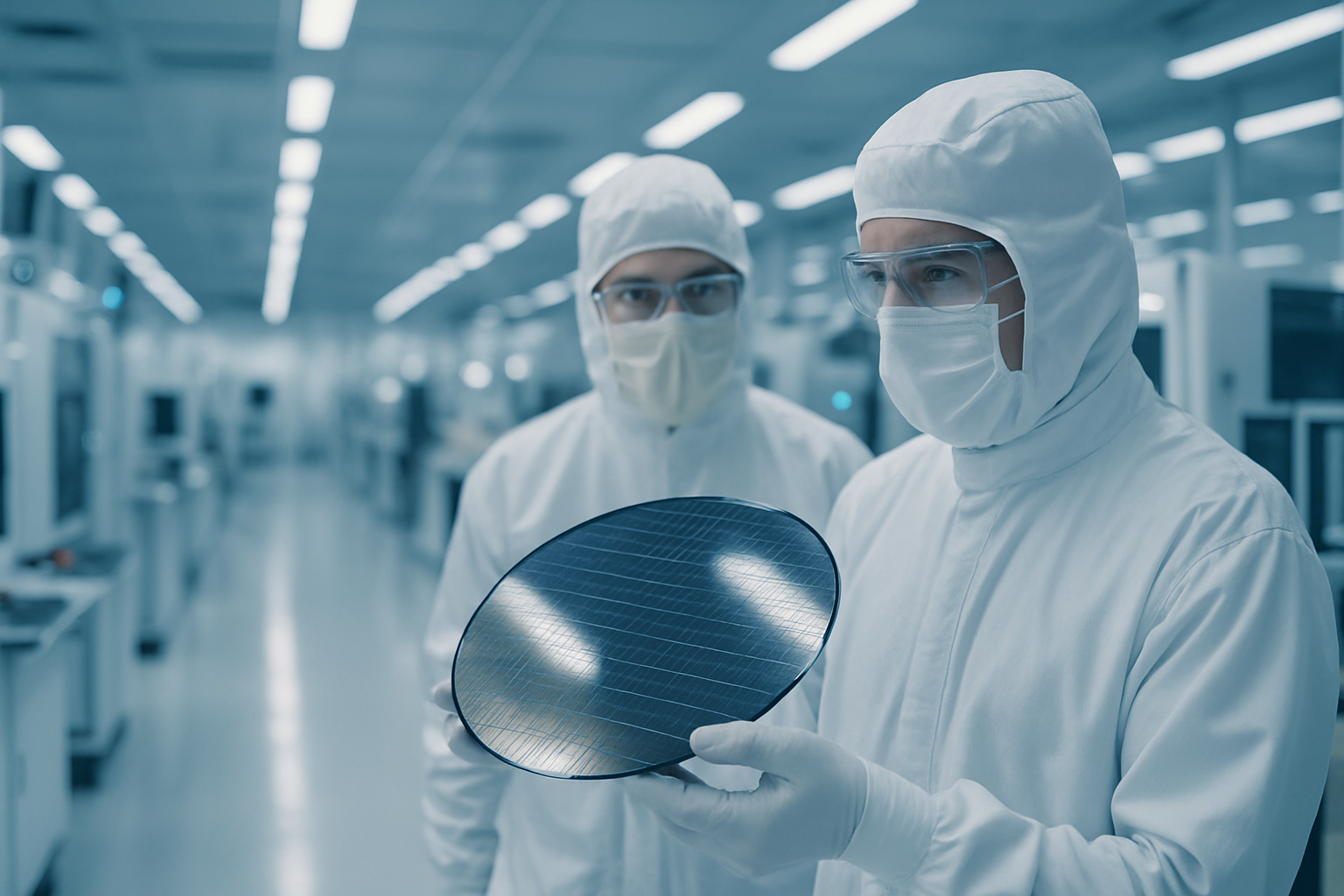
Taiwan Semiconductor sits underneath almost everyone else. It is the world's largest dedicated contract chip manufacturer, and it fabricates the leading-edge silicon that fabless designers — including AMD, Broadcom, and the market's AI leader — rely on. If AMD and Broadcom sell shovels, TSMC makes the steel.
Its moat is arguably the most durable of the three because it is built on decades of process expertise and staggering capital investment. Building a leading-edge fab costs tens of billions of dollars and years of lead time, and only a handful of companies on earth can manufacture at the most advanced nodes at all. That scarcity gives TSMC unusual leverage over the entire ecosystem.
The bet is the purest expression of "sell shovels, don't pick winners." TSMC benefits from rising AI chip demand no matter which designer's product ends up on top, because most of them are its customers. The distinctive risk is also unmistakable: the concentration of the most advanced manufacturing in Taiwan carries geopolitical exposure that has no equivalent among the other two names, and the sheer capital intensity of the business means spending discipline matters enormously.
Three Bets, Not Three Copies
The temptation with a theme like AI compute is to treat these as interchangeable ways to buy the same trend. They aren't. AMD is a share-gain and execution story in the same product categories as the incumbent. Broadcom is a wager on custom silicon and the unglamorous networking layer that scales with cluster size. TSMC is a bet on the manufacturing chokepoint that sits below all of them.
Each also carries a different flavor of risk. AMD's is competitive; Broadcom's is complexity and diversification away from the pure theme; TSMC's is geopolitical and capital-driven. An investor who "missed" the headline name isn't choosing between three consolation prizes — they're choosing which layer of the stack they actually want to own, and which risk they're most comfortable underwriting.
None of that guarantees an outcome. The AI buildout could slow, spending could prove lumpy, and any of these companies could disappoint on execution. But understanding what each firm actually controls is the difference between chasing a story and evaluating a business. The picks-and-shovels layer is wider than one company — and so is the range of ways to be right or wrong about it.